Need concrete driveways in San Bernardino?
Planning a new driveway or patio? Request a callback to check provider availability, or request an estimate and a local provider will follow up.
No obligationNew concrete driveways for San Bernardino homeowners
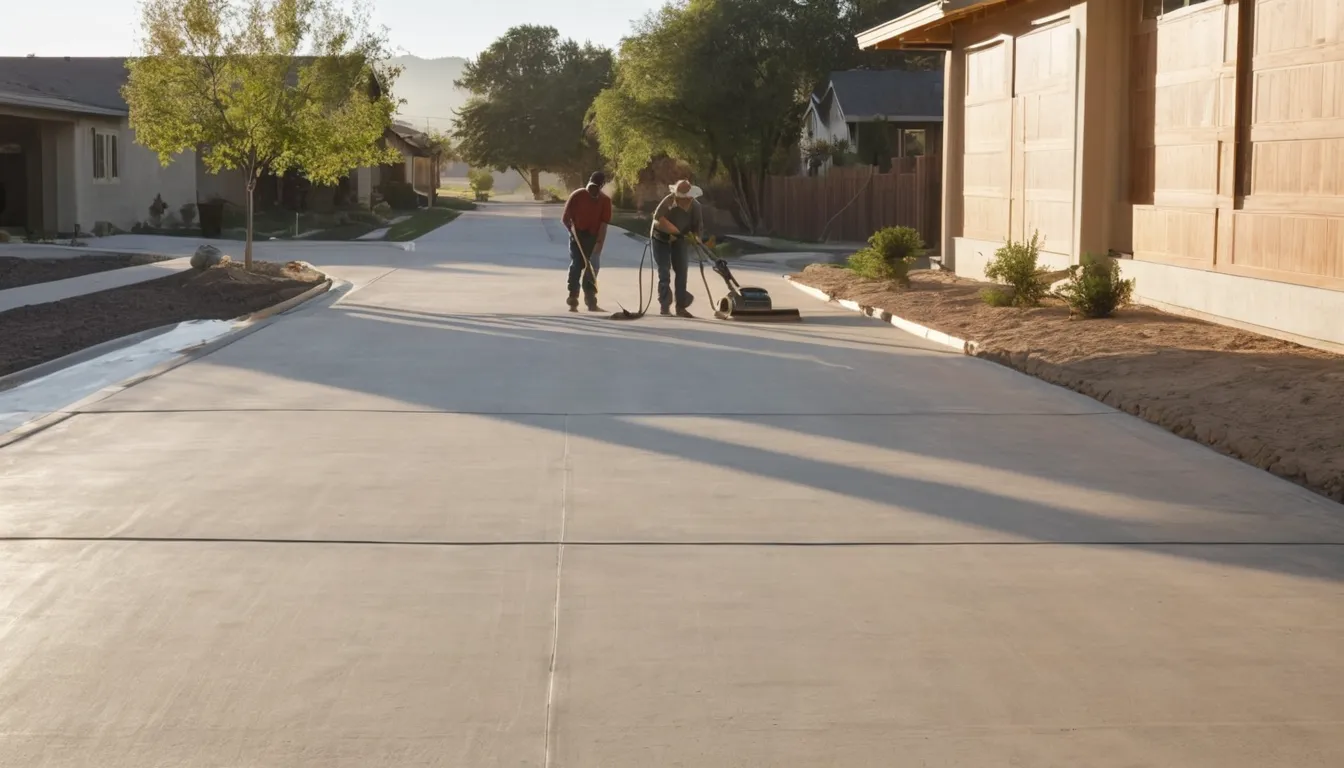
A lot of people think a driveway is just a gray slab that gets poured and forgotten. In practice, a good one depends on the ground under it, the mix, the weather and the days after the pour.
Linkwages Concrete is a referral service. We do not pour concrete. We connect homeowners in San Bernardino and the San Bernardino area with independent providers in our network who handle new concrete flatwork and set their own prices. This page walks you through the basics so you can ask sharp questions and compare quotes in writing with confidence.
A lot of people think pour day is the whole project. In practice, pour day is the middle. Planning comes before it. Curing comes after it. Knowing the full timeline keeps surprises small.
Some owners hope a patch will do. Sometimes it will. If you only have a few hairline cracks, concrete driveway repair may be the better fit, and that is a different kind of job. A new driveway fits when the slab is broken up, sunken in several spots, or the surface is flaking apart.
Look for these clues:
Many 1950s to 1980s tract homes sit on older fill and thin slabs. Dry seasons shrink the soil. Winter rain swells it. That movement can crack even a decent driveway. If you also notice cracks inside the house or sticking doors, talk with foundation repair experts before you plan new flatwork.
Concrete does not wait for anyone. Once it is mixed, a crew has a limited window to place it, level it and finish it. Here is the usual order:
A complete job usually covers more than the pour. Expect measuring, removal of the old slab, grading, a compacted gravel base, forms, reinforcement, the pour, finishing, control joints and cleanup. Ask each provider to list every step in the quote.
More inches sound safer. In practice, thickness should match your use. Many home driveways run about four inches. Heavier trucks or RVs may call for five or six. The base and the steel matter just as much as the depth.
Measure how you really park. A two-car driveway often needs a wider pad than the garage door suggests. Leave room to open car doors and walk beside the vehicle. A slight slope away from the house keeps water moving off the slab.
A broom finish is common because it gives grip when wet. Smooth trowel finishes can be slick. Colors and patterns are possible, though they change the price. If you want a decorative look, ask about it up front. Patios have their own page, including stamped concrete patios.
Long dry seasons are handy for scheduling, but hot, dry air can pull moisture out of fresh concrete too fast. Providers may pour early, use shade or mist the surface. Winter rain can delay a job, so a short wait is normal. Smoky days are mostly a comfort issue for workers, not for the concrete.
The apron is the part of the driveway where it meets the street or sidewalk. Cities often own that strip and set their own rules. A permit may be needed for it, or for changing the driveway width. Ask each provider who handles the paperwork and whether it is in the quote.
Myth: the first quote you get is the one you should take. Compare at least two. Ask about:
Get your quote in writing before anything starts.
Keep cars, bikes and pets off until your provider says it is safe. Hose the slab lightly if they advise it. Wait on sealers until the surface has cured long enough. Small hairline cracks can still appear, and control joints are there to guide them.
Sweep off debris. Rinse away oil spills soon. Avoid harsh de-icing salts and cleaning chemicals unless the provider says they are fine. A sealer, if recommended, may need renewing every few years.
Linkwages Concrete makes the introduction. The independent providers in our network do the work and set their own prices. Request an estimate, compare what you hear, and choose the one that fits.
Old broken concrete is removed and carried off so the new slab starts on clean ground.
The soil is shaped and a gravel layer is packed so water drains and the slab sits level.
Wood forms set the shape. Rebar or mesh helps hold the slab together as it ages.
Concrete is placed, smoothed and jointed, then the site is cleared once work wraps up.
Prices vary by size, soil, access, finish and local rules. Treat these as rough ranges, and always get a written quote from each provider.
| Item | Typical range | Notes |
|---|---|---|
| Plain broom-finish concrete | $6 – $12 per sq ft | Varies with thickness and local labor |
| Typical two-car driveway | $4,000 – $8,000 | Often around 500 to 700 square feet |
| Old slab removal and haul-away | $1 – $3 per sq ft | Depends on thickness and disposal fees |
| Base prep and grading | $1 – $3 per sq ft | Higher on soft or sloped ground |
| Rebar or wire mesh | $0.50 – $1.50 per sq ft | Adds strength and crack control |
| Color or decorative finish | $2 – $10 per sq ft | Added on top of the base price |
Tell us the size, the finish you like and whether an old slab needs removal.
A local, independent provider from our network reaches out to talk through your project.
Review scope, thickness, base, permits and price, then ask any questions you still have.
Pick a date that suits the weather, then follow the provider's curing advice afterward.
We explain the process in simple terms, so a first project feels less confusing from the start.
Providers in our network know area soil, weather and the permit habits of nearby cities.
You compare quotes in writing and pick the provider who fits your plans, schedule and budget.
Asking for an estimate carries no obligation. You decide if and when to move ahead.
Planning a new driveway or patio? Request a callback to check provider availability, or request an estimate and a local provider will follow up.
No obligationMost driveways can handle foot traffic after a day or two. Cars usually wait about a week. Concrete keeps gaining strength for roughly a month, so follow your provider's advice on heavier vehicles.
Many home driveways are about four inches thick. Heavier trucks or RVs may need five or six inches. A compacted base and reinforcement matter too, so ask each provider to list them in the written quote.
Often yes, especially for the apron where the driveway meets the street, or if you change its width. Rules differ by city, so ask your provider and your local building office what applies.
Planning a new driveway or patio? Request a callback to check provider availability, or request an estimate and a local provider will follow up.
No obligation